
Hospital Patient Monitoring System Architecture
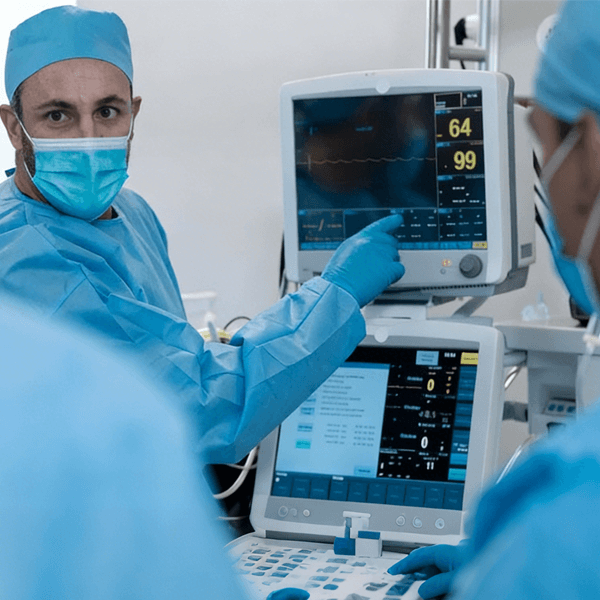
Hospital Patient Monitoring System Architecture
This monitoring system is widely used in hospital departments such as intensive care units (ICU), emergency rooms and general wards. By integrating monitoring devices with hospital networks, patient physiological data can be displayed both locally at the bedside and centrally at nurse stations.
Typical monitored parameters include ECG waveforms, heart rate, oxygen saturation, blood pressure and respiratory rate.
Core Components of a Hospital Monitoring System
A hospital monitoring system normally includes three main components.
Bedside Patient Monitors
Bedside monitors are installed near patient beds and collect physiological signals from sensors attached to the patient.
Common monitoring parameters include:
• ECG waveform
• Heart rate
• Oxygen saturation (SpO2)
• Non-invasive blood pressure (NIBP)
• Respiratory rate
• Temperature
These monitors display real-time vital signs directly at the patient’s bedside.
Central Monitoring Station
A central monitoring station is usually located at the nurse station or monitoring center.
It receives patient data from multiple bedside monitors and displays vital signs for several patients simultaneously.
Medical staff can observe ECG waveforms and alarm notifications from the central system, allowing faster response to abnormal patient conditions.
Hospital Monitoring Network
Bedside monitors and central stations are connected through the hospital network.
This connection allows:
• Real-time data transmission
• Centralized monitoring
• Alarm notifications for abnormal vital signs
The network connection can be wired or wireless depending on hospital infrastructure.
Typical Deployment in Hospital Departments
ICU Monitoring→
ICU patients require continuous multi-parameter monitoring.
ICU monitoring systems often use modular patient monitors that support additional monitoring modules.
General Ward Monitoring→
In general wards, bedside monitors are used for routine patient monitoring and may connect to a central monitoring station.
Emergency Monitoring→
Emergency departments use patient monitors for rapid assessment and continuous observation during treatment.
Example Structure of a Hospital Monitoring System
A typical hospital monitoring deployment may include:
• Bedside patient monitors installed in each patient room
• A central monitoring station at the nurse station
• A hospital network connecting all monitoring devices
This structure allows healthcare professionals to monitor multiple patients from one location while still providing local monitoring at each bedside.
Compatible Monitoring Devices
The hospital monitoring system can work with different types of patient monitors.