
Patient Monitors for General Ward Monitoring
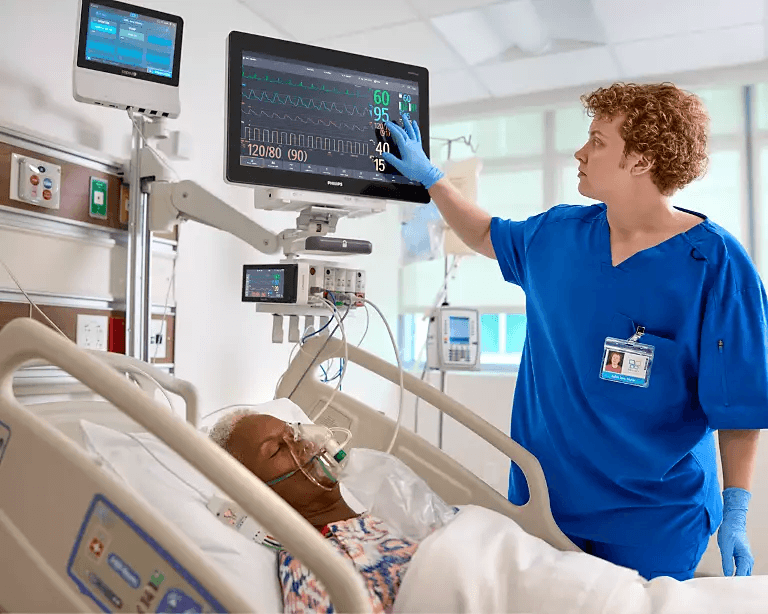
General Ward Patient Monitoring
Bedside monitoring systems provide essential monitoring parameters such as ECG, heart rate, oxygen saturation and blood pressure. These monitoring devices help medical staff improve patient safety and support efficient clinical workflows in hospital wards.
General ward patient monitors are typically designed for bedside use, offering stable performance, clear displays and easy operation for daily patient monitoring.
Why Monitoring Is Important in Hospital Wards
Hospitalized patients often require continuous monitoring to ensure that their physiological conditions remain stable. Bedside patient monitors allow medical staff to observe vital signs in real time and identify potential complications early.
Typical monitoring parameters include:
• ECG monitoring
• Heart rate monitoring
• Oxygen saturation monitoring (SpO2)
• Blood pressure monitoring (NIBP)
• Respiratory monitoring
• Body temperature monitoring
Continuous bedside monitoring improves patient safety and helps healthcare providers deliver timely medical care.
Recommended Patient Monitors for General Wards
These patient monitors are suitable for bedside monitoring in hospital wards.
Bedside Monitoring in Hospital Wards
In hospital wards, bedside patient monitors are connected to patients through sensors that collect physiological signals. The monitoring system displays real-time data on the monitor screen, allowing medical staff to observe patient conditions during routine care.
Bedside monitoring devices can also be connected to hospital central monitoring systems, enabling medical teams to supervise multiple patients simultaneously.