
Bedside Patient Monitors for Continuous Patient Monitoring
What Are Bedside Patient Monitors?
Bedside monitors are used for:
• Continuous patient monitoring in general wards
• Real-time tracking of vital signs
• Supporting routine clinical observation
Unlike ICU monitors, they are designed for stable patients and long-term monitoring in non-critical environments.
Recommended Patient Monitors
Below are typical monitoring devices used in intensive care units.

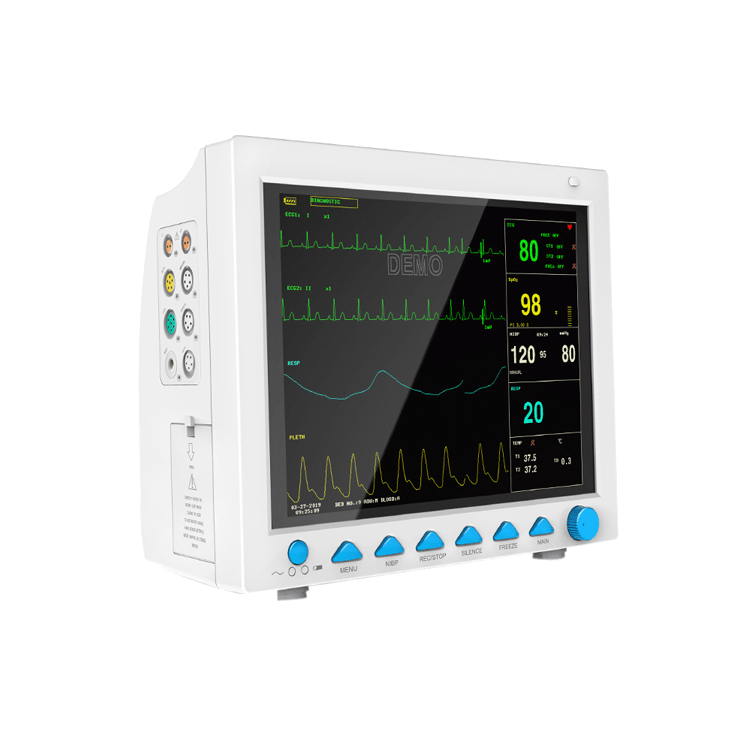
CMS8000 Patient Monitor
multi-parameter monitor serves adults, pediatrics and neonates. 12.1'' TFT LCD, ECG, RESP, NIBP, SpO2, dual TEMP, optional printer, compact design and built-in battery for mobility.
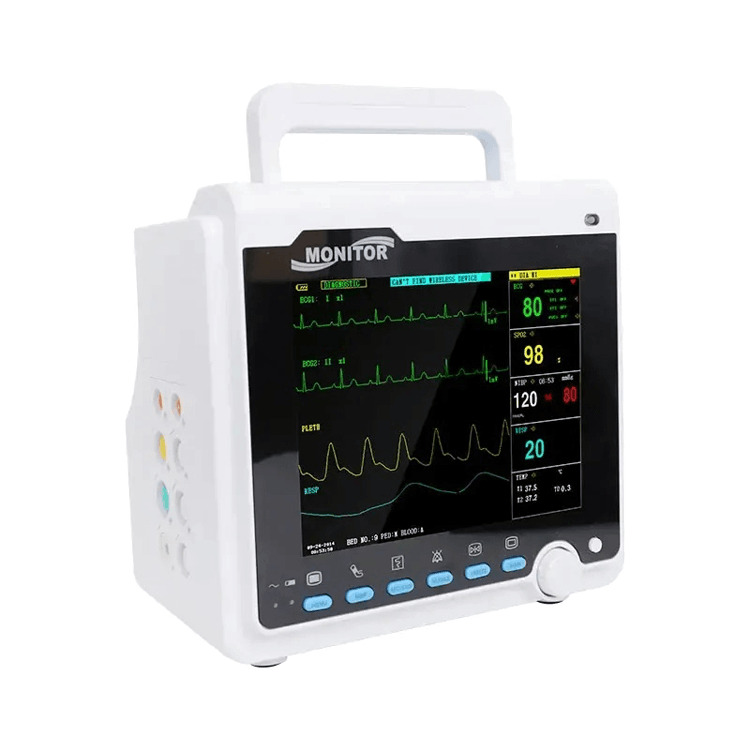
CMS6000 Patient Monitor
suits adults, pediatrics and neonates. 8" TFT display for real-time data and waveforms, supports wired/wireless central monitoring, and includes ECG, RESP, SpO₂, NIBP and dual TEMP.
Choose the Right Bedside Patient Monitor
| Level | Models | Best For | Key Advantage | Recommendation | Standard | CMS6000 / CMS6500 / CMS6800 | Routine hospital use | Stable performance | ⭐ Most common choice |
| Mid-range | CMS7000 | Higher monitoring demand | Balanced capability | Upgrade option |
| Advanced | CMS8000 / CMS8500 | Complex ward monitoring | More features & performance | Large hospitals |
| High-end | CMS9000 | Near-ICU level monitoring | High capability | Premium choice |
| Type | Best For | Advantage | Limitation |
| Bedside Monitors | General wards | Continuous monitoring | Not for critical ICU |
| ICU Monitors→ | Critical care | Advanced monitoring | Higher cost |
| Portable Monitors→ | Transport / emergency | Mobility | Not continuous use |
Typical Applications
Bedside patient monitors are widely used in:
• General hospital wards
• Outpatient monitoring areas
• Step-down units
• Long-term patient observation
How to Choose the Right Bedside Monitor
When selecting a bedside monitor, consider:
• Patient condition and monitoring intensity
• Number of beds and deployment scale
• Budget and procurement plan
• Required monitoring duration
Who Should Choose Bedside Patient Monitors?
This category is ideal for:
• Hospitals with general wards
• Clinics requiring continuous monitoring
• Medical distributors supplying hospitals
• Healthcare projects with large deployment needs
Looking for the Right Bedside Monitor?
Choosing the right model depends on your clinical needs and budget.
FAQ:
What is a bedside patient monitor?
A bedside patient monitor is a medical device used in hospitals to continuously monitor patient vital signs such as ECG, oxygen saturation and blood pressure.
Where are bedside monitors used?
Bedside monitors are commonly used in hospital wards, recovery units and observation rooms where patients require continuous vital sign monitoring.
What parameters do bedside patient monitors measure?
Most bedside monitors measure ECG waveform, heart rate, oxygen saturation (SpO2), blood pressure and respiratory rate.
