Patient Monitors for ICU Monitoring
ICU Monitoring
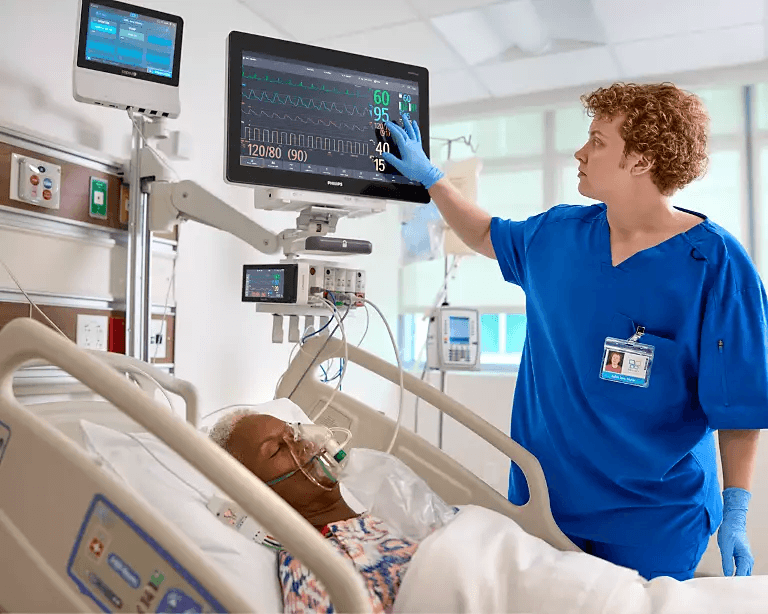
Modern ICU monitoring systems display ECG waveforms, oxygen saturation, blood pressure and respiratory parameters simultaneously. These monitoring devices play an essential role in maintaining patient safety and improving clinical decision making in critical care environments.
Hospitals rely on advanced ICU monitoring systems to ensure accurate and continuous monitoring for patients who require intensive medical attention.
Why ICU Monitoring Systems Are Essential
ICU patient monitoring systems allow medical professionals to track vital physiological signals continuously. These monitoring systems help detect early signs of clinical deterioration and support timely medical interventions.
Typical ICU monitoring parameters include:
• Electrocardiogram (ECG) monitoring
• Oxygen saturation monitoring (SpO2)
• Non-invasive blood pressure monitoring (NIBP)
• Respiratory monitoring
• Body temperature monitoring
Recommended Patient Monitors for ICU
These patient monitoring devices are commonly used in intensive care environments.
ICU Monitoring Workflow
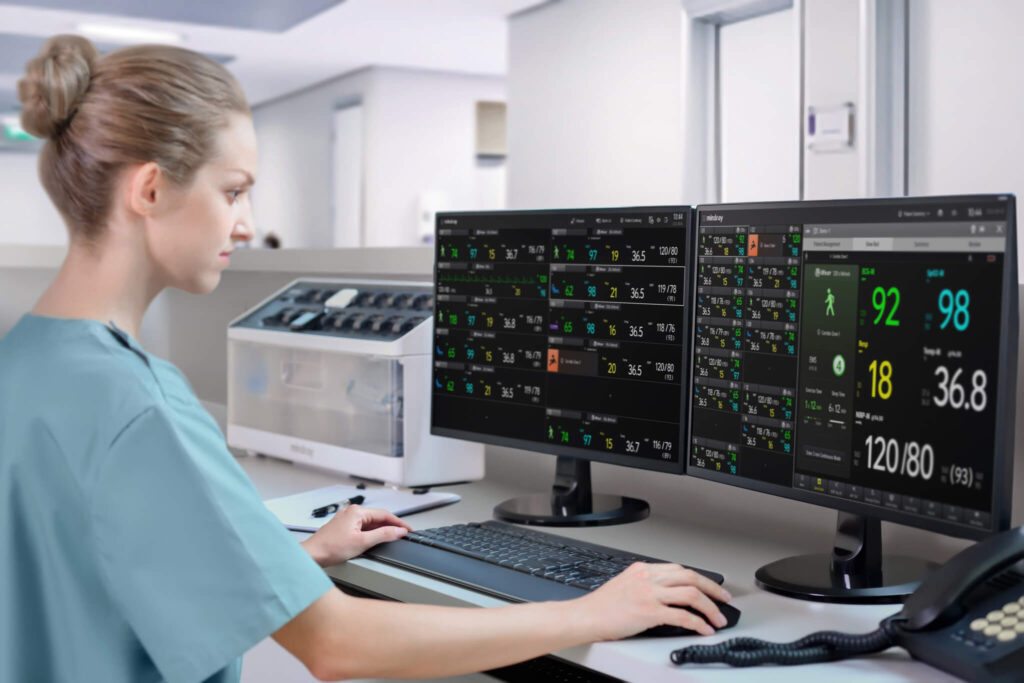
In a typical intensive care environment, monitoring systems collect physiological data through sensors connected to the patient. The bedside monitor displays real-time waveforms and vital signs while transmitting data to a central monitoring station.
Doctors and nurses can review monitoring trends and alarms through the central monitoring system, ensuring quick responses to critical patient events.