
ECG machines
for Clinics,Hospitals, and Distributors
Electrocardiograph (ECG/EKG) machines are essential diagnostic tools used across outpatient clinics, hospitals, and medical distributors worldwide. However, selecting the right ECG system is not simply a matter of choosing a model number. Clinical environment, workflow intensity, diagnostic accuracy, and regulatory requirements all play a decisive role.
This page is designed to help procurement teams, distributors, and medical professionals understand how to evaluate ECG machines based on real usage scenarios, not just technical specifications.
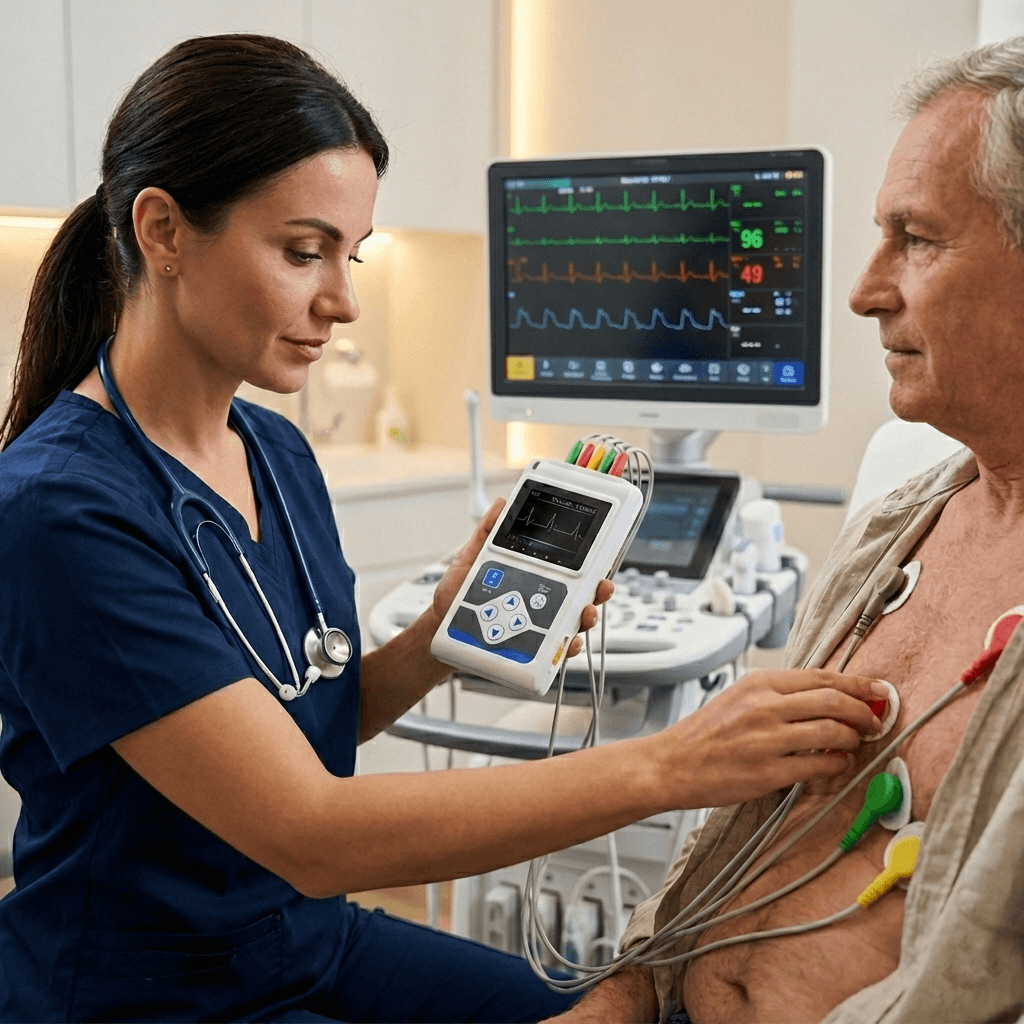
How to Select an ECG Machine: Start from Application, Not Model
Many suppliers organize ECG products strictly by model series. In real procurement practice, this often leads to mismatches between equipment capability and clinical needs.
A more reliable approach is to assess ECG systems based on application scenarios:
Routine cardiac screening in outpatient clinics
High-volume diagnostic use in hospitals
Portable or emergency applications
Distributor-focused procurement for multiple markets
Each scenario places different demands on channel count, workflow efficiency, data accuracy, and long-term reliability.
ECG Machine Classification by Clinical Use
Routine cardiac screening focuses on basic ECG examinations performed during daily outpatient visits and primary care consultations. The goal is rapid assessment, ease of operation, and reliable waveform capture rather than advanced analysis.
Typical clinical settings:Primary care clinics, outpatient departments, community health centers
Recommended ECG types
Clinical diagnostic ECG examinations support routine hospital diagnostics, requiring clearer waveform display, faster acquisition, and stable performance for repeated daily use.
Typical clinical settings:General hospitals, diagnostic departments, private diagnostic centers
Recommended ECG types
Advanced cardiology use involves comprehensive cardiac diagnostics, including detailed waveform analysis and full 12-lead acquisition. Equipment stability, diagnostic accuracy, and compatibility with hospital workflows are critical.
Typical clinical settings:Cardiology departments, inpatient wards, specialized heart centers
Recommended ECG types
Mobile and emergency ECG solutions are designed for rapid deployment, bedside examinations, and emergency response situations where portability and battery operation are essential.
Typical clinical settings:Emergency departments, ambulances, bedside care, mobile medical units
Recommended ECG types
Long-term cardiac monitoring focuses on continuous ECG recording to detect intermittent arrhythmias and support extended diagnostic evaluation over 24 to 48 hours or longer.
Typical clinical settings: Cardiology clinics, diagnostic centers, follow-up care departments
Recommended ECG types
How ECG Machines Are Selected in Real Clinical Use
Different clinical scenarios require different ECG solutions.
Instead of choosing by specifications alone, many buyers prefer selecting ECG machines based on real clinical workflows.
Why Procurement Risk Matters in ECG Selection
In ECG procurement, the hidden risk is rarely price. It is misalignment between device capability and actual clinical usage.
Common issues include:
Over-specified systems that increase cost without clinical benefit
Under-powered devices that fail under high patient volume
Inconsistent firmware or accessory compatibility across batches
This is why professional buyers increasingly evaluate ECG solutions from a system reliability and lifecycle perspective, not just initial purchase cost.
Our Role in ECG Procurement
We do not position ECG machines as isolated products. Instead, we focus on helping buyers:
Match ECG configurations to real clinical workflows
Avoid unnecessary complexity in daily operation
Ensure consistency across multiple shipments and markets
This approach is particularly relevant for distributors and procurement teams managing multiple customer profiles or regional compliance requirements.
ECG Machines for Distributors and OEM Projects
For distributors, ECG selection often involves additional considerations:
Market-specific certification requirements
Long-term supply consistency
Branding or OEM customization needs
ECG systems listed on this page are suitable for standard distribution, tender projects, and OEM cooperation, depending on configuration and market requirements.
Recommended ECG Product Categories
Instead of highlighting a single “best” model, we recommend reviewing ECG systems by category:
Entry-level ECG machines for routine screening
Advanced diagnostic ECG systems for cardiology use
Portable ECG solutions for mobile healthcare
Each category reflects a different balance between functionality, workflow efficiency, and procurement cost.
Choosing the right ECG machine is a clinical and operational decision, not just a technical one. By understanding application scenarios and procurement risks, buyers can make informed decisions that support long-term clinical performance and business stability.
Explore the ECG categories below or contact us to discuss application-specific recommendations.
Subsribe To Our Newsletter
Stay in touch with us to get latest news and special offers.
Address
123 5th Avenue, New York, US
Call Us
+1 123 456 7890
Email Us
info@example.com